

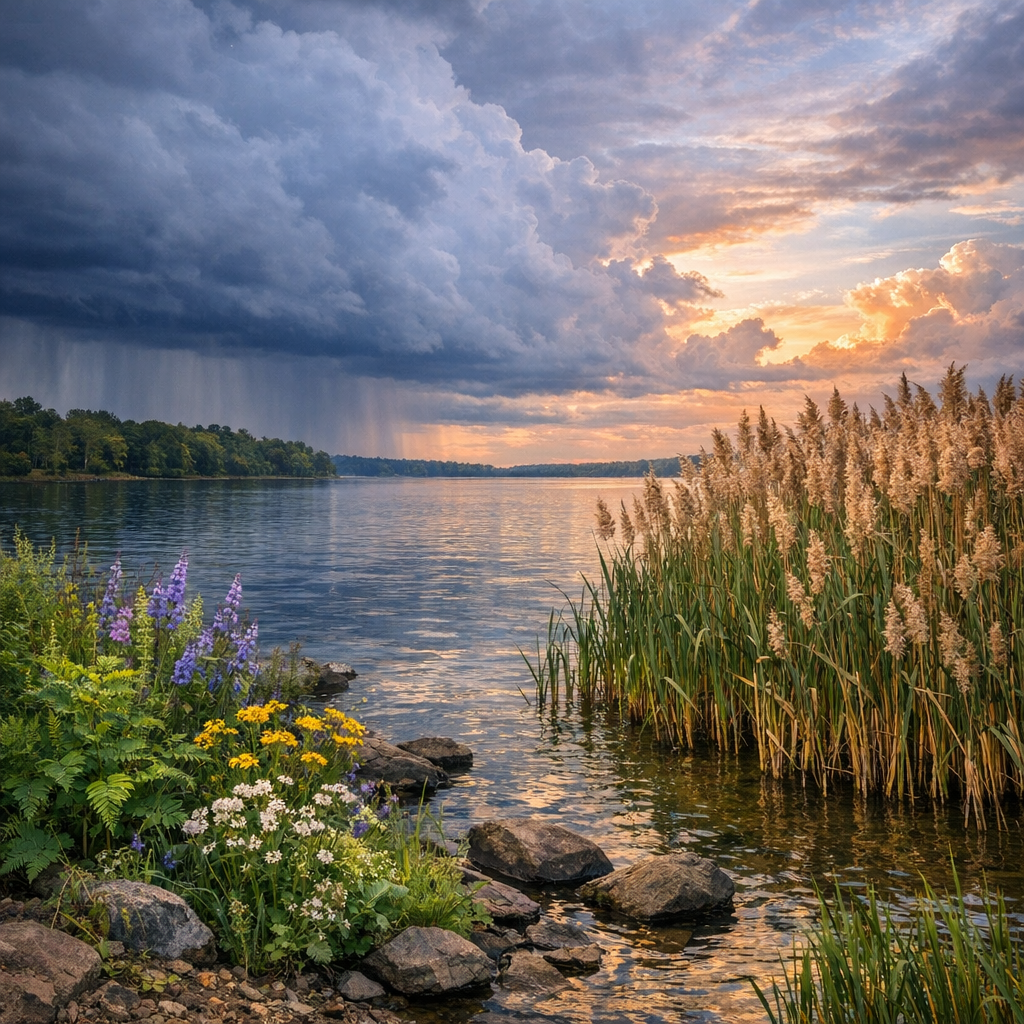
Green Bay’s weather and environment are quietly shifting—and these changes ripple through every season. Understanding the evolving patterns helps us better prepare, protect our landscapes, and appreciate how much our natural world is adapting.
Subtle Warmth, Noticeable Shifts
Between 1991 and 2020, Green Bay’s average annual temperature rose by roughly 3.9°F compared to mid-20th-century averages. Winters have warmed more than any other season, by about 6°F. Spring and fall are steadily warming too. Summer increases are more modest, but still measurable. These data come from long-term climate records compiled by regional climatologists. The trend matches broader Midwest warming but with local effects unique to our Great Lakes proximity.
Changing Patterns in Snow, Rain, and Wind
Snowfall used to be reliably concentrated in midwinter, but now heavier snow events are creeping into late fall and early spring. Average snowfall for January and February still surpasses 4 inches per month, yet more frequent wet, heavy snow has implications for infrastructure and ecology. Precipitation overall is fairly evenly spread; the wettest single month tends to be June, with over 3.5 inches on average, while January often sees the least precipitation. Windier, overcast conditions dominate the months from fall through spring, while summer tends to bring clearer skies and calmer days.
Ecosystem Responses & Environmental Concerns
Warmer winters and shifting precipitation support thriving invasive species in and around Green Bay—both aquatic and terrestrial. Plants like common reed (Phragmites), aquatic invaders including zebra and quagga mussels, and algae blooms are altering habitat composition, water clarity, and nutrient cycles. Local efforts including restoration of wetlands and shoreline plantings are underway as part of the Fox River/Lower Green Bay Area of Concern remediation. By targeting contaminated sediments, habitat loss, and water quality issues, stakeholders aim to restore ecological health.
What Green Bay Can Do
- Track local planting and growing zones—warmer winters may allow more species to survive, but sudden cold snaps still pose risks.
- Support habitat-restoration and native-species planting to curb invasive spread and buffer ecosystems.
- Prepare for mixed snow-ice events—updating infrastructure resilience is becoming more important each year.
- Stay informed through city sustainability dashboards and local reports to see how conditions stack up against long-term norms.
Green Bay is adapting to a changing climate in its temperature, seasonal boundaries, precipitation, and ecological makeup. By noticing and responding to these shifts today, we build a more resilient community for tomorrow.