

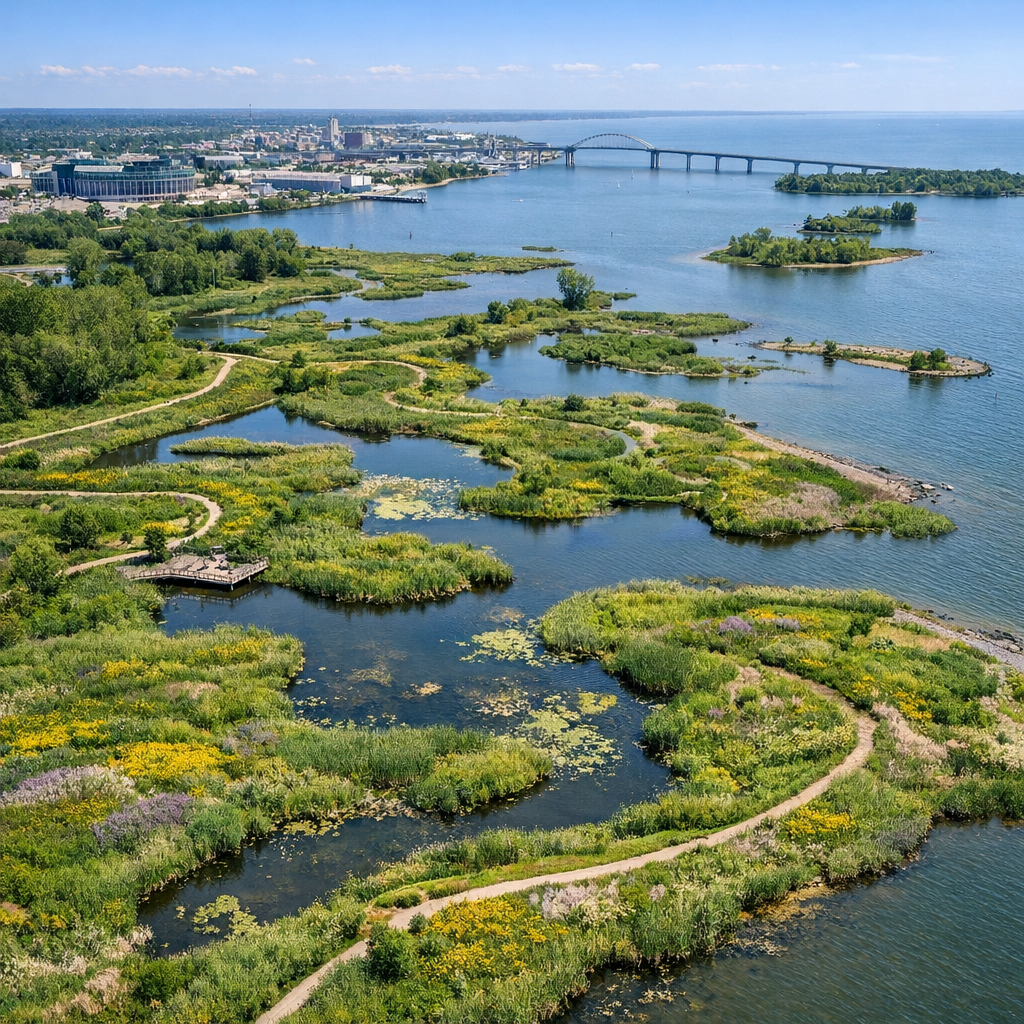
Green Bay, Wisconsin, is renowned for its rich natural landscapes and commitment to environmental stewardship. The city has undertaken several initiatives to preserve and enhance its unique ecosystems.
Restoring Wetlands and Protecting Wildlife
Recognized as the world’s largest freshwater estuary, the Green Bay region serves as a critical refuge for various bird species. In collaboration with partners, efforts are underway to restore 6,500 acres of coastal wetlands and protect endangered species like the Great Lakes Piping Plover. These initiatives aim to rehabilitate habitats degraded by urbanization and pollution, ensuring a thriving environment for marsh birds and other wildlife.
Expanding Pollinator Habitats
The Green Bay Conservation Corps has made significant strides in enhancing pollinator habitats. In partnership with the Green Bay Botanical Garden, thousands of native plants have been installed across multiple city sites. This expansion of the Northeast Wisconsin Pollinator Corridor Project supports pollinators essential for local agriculture and biodiversity.
Establishing a National Estuarine Research Reserve
The University of Wisconsin-Green Bay is leading efforts to designate local waters as a National Estuarine Research Reserve (NERR). This designation would facilitate research and conservation efforts, addressing local coastal management issues and protecting the world’s largest freshwater estuary. The NERR aims to promote STEM education and contribute to the local economy through increased tourism and outdoor recreation opportunities.
Through these concerted efforts, Green Bay continues to demonstrate its dedication to environmental conservation, ensuring the preservation of its natural heritage for future generations.